About Us
About the Agent Ecosystem Collective
An independent research collective studying how AI agents interact with the web, documentation, and developer tooling. We publish reports and open specifications, build compliance tools, and educate the ecosystem on what works.

Dachary Carey
Lead Researcher
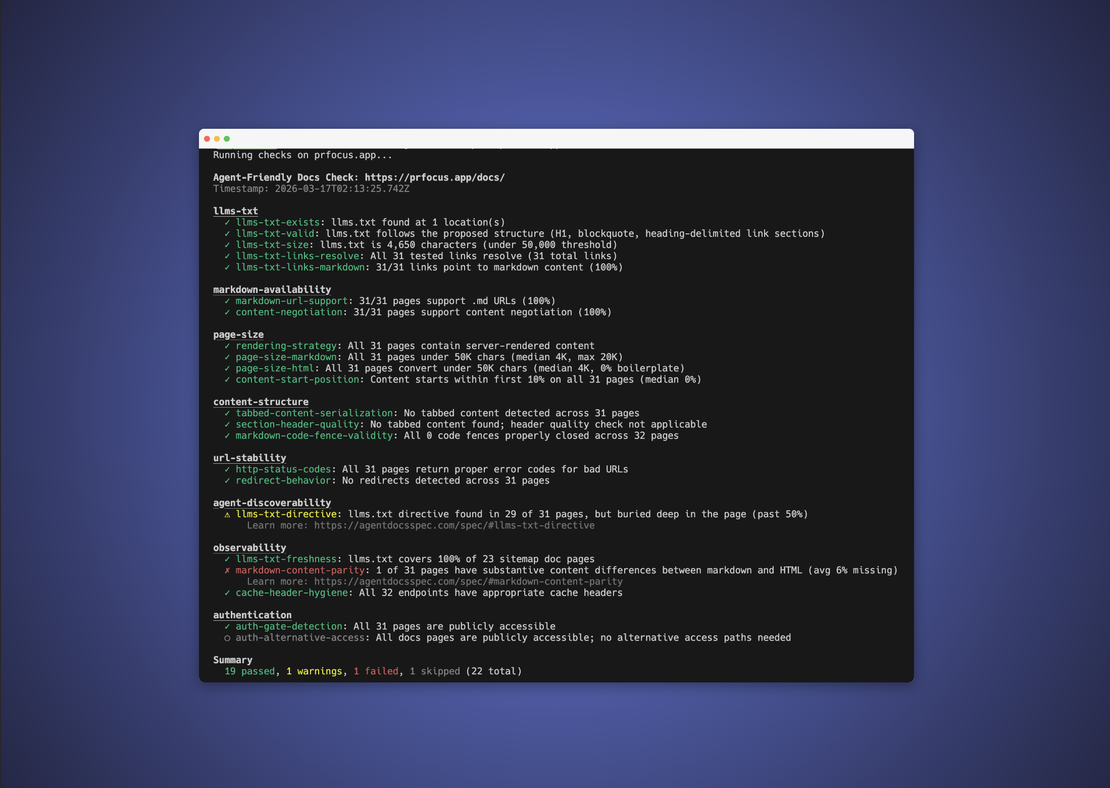
The Agent Ecosystem Collective grew from direct experience: watching agents fail while trying to retrieve information on hundreds of documentation sites, and realizing that nobody was systematically studying these failure modes or building standards to fix them.




Kay Rhodes
Developer
Lending 20+ years of development experience to build the tooling registry, installation CLI, and other planned developer tools for the agent ecosystem.

Rhyannon Rodriguez
Poker-of-Things
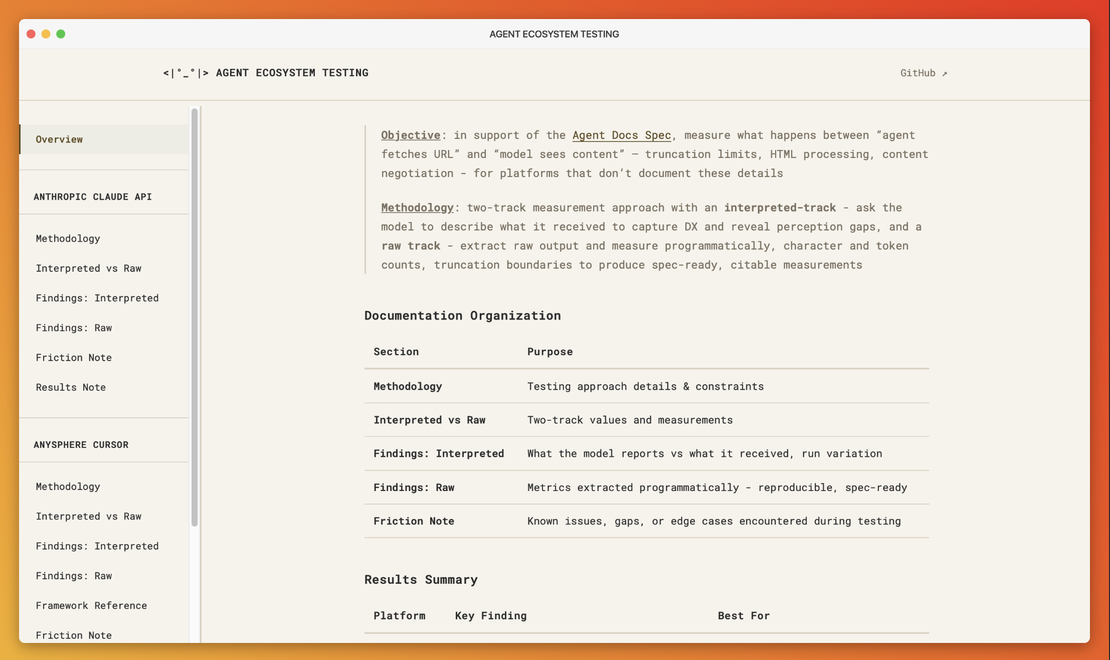
Bringing a background combining library science, development expertise, and technical writing to ask questions, run tests, and document the results.
Our Principles
What Drives Us
Independent, empirical, open, and built to be used.
Independence
The collective is self-funded, with no commercial stake in any platform or vendor. Published findings reflect what the data shows.
Empirical Rigor
We don’t speculate about what might matter. We measure what does. Every specification traces back to observed agent behavior.
Open by Default
Specifications, tools, scoring algorithms, and research methodologies are open source. Ecosystem standards should be available to everyone.
Adoption through Utility
We build specs that solve real problems and tools that make compliance easy to measure. Standards get adopted when they’re useful, not when they’re promoted.
Open Source Tools
6
Agent Skills Audited
673+
Sites Scored via Agent Score
500+
FAQ
Frequently Asked Questions
Common questions about the Agent Ecosystem Collective.
Research Built in the Open
The collective is independent and self-funded by design. Nobody pays for our conclusions, and everything we publish (specifications, tools, scoring algorithms, and research methodology) is open source and freely available.
Follow the Work on GitHub